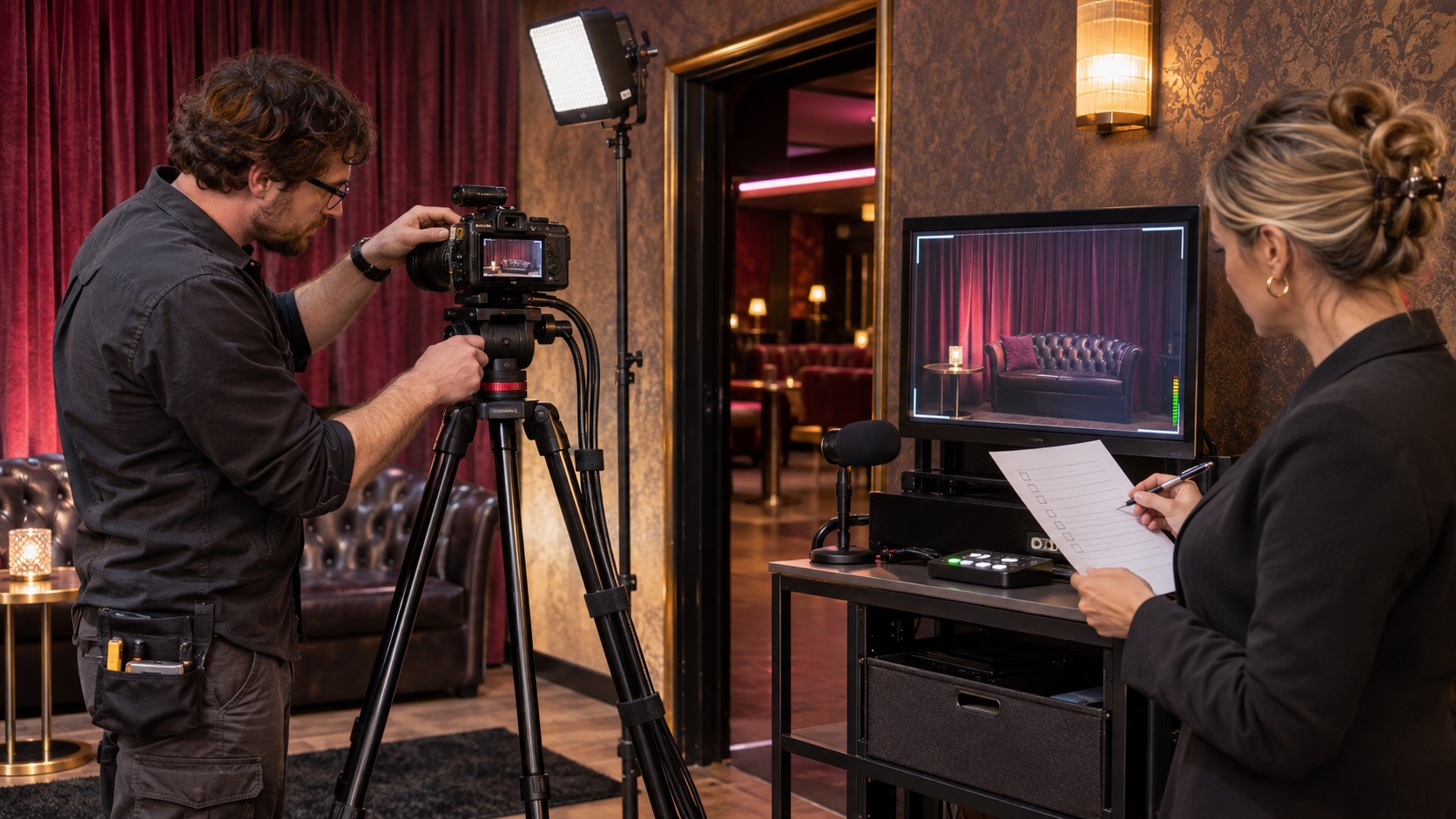
Choose the room. Protect the club’s working day.
Start with the broadcast format. A performer stream, a hosted session and a club-branded program place different demands on the room. Choose a controlled space with the right frame, sound and room to move.
Build the schedule around club trading and performer availability. Include preparation, equipment checks, breaks and reset time. The useful plan is one the local team can run consistently.
- A defined broadcast area with controlled access
- A camera view that excludes unrelated guests and staff
- Checks for mirrors, background conversations and club music
- A schedule that accounts for setup and reset
Assign the work before buying the equipment.
Name the person who opens the room, confirms the performers, checks the setup and handles a missed session. Give that person a route to technical help that does not depend on finding the club manager during service.
The club provides the space and local coordination. Afterhours brings the operating brief together. The platform or technical partner confirms the production requirements, installation responsibilities and support process. Each performer reviews their own participation and earnings arrangement.
Test a complete broadcast in the actual room.
Ask the technical partner to check the camera, lighting, microphone, connection and account access together. A good picture is only useful if the sound, stream and audience interaction also work.
Rehearse starting, pausing and ending a session. Test at the hours the room will be used, with the club operating around it. Write down who handles a dropped connection, an equipment fault or someone entering the broadcast area.
- Picture and sound checked from the viewer’s side
- Connection tested under normal club conditions
- Performer and local coordinator familiar with the controls
- Technical support details available in the room
Put the full cost next to the revenue share.
List equipment, installation, room preparation, software, staffing and ongoing support. Separate one-time costs from recurring costs, and identify who pays each one.
Then follow the money from customer spending through platform deductions and agreed allocations to the club’s net contribution. Review that amount alongside the hours and resources the program uses. The revenue planner helps you work through the arithmetic with your own inputs.