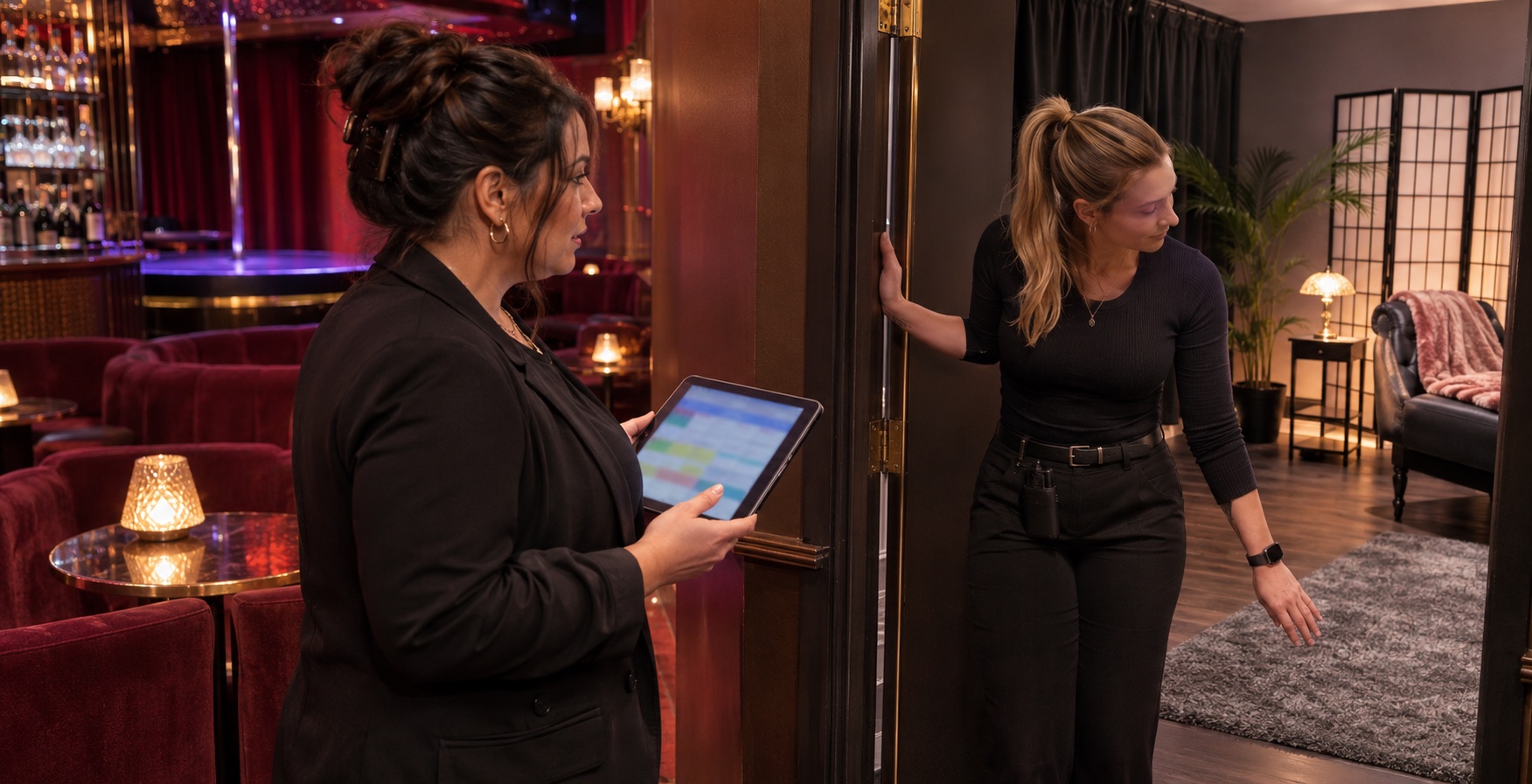
Choose hours the club can support.
Use a sample shift to check the handoffs: the local contact opens the room, checks the camera frame, sound and connection, and confirms the performer is ready and willing. The broadcast runs only inside the agreed slot. If service interrupts, the room contact handles access while the platform contact handles account or stream faults. Afterward, the team signs off the room, records any issue and resets the space for club use. This is an example sequence; the club sets its own timing and staffing.
- Name who opens and secures the room
- Allow time for equipment checks and room handoff
- Confirm the performer’s schedule and voluntary participation
Protect the rest of the venue.
Define the camera frame and room access before the session. Keep unrelated guests, staff, private conversations and changing areas outside the production. Give performers a clear way to pause or end the stream.
- Mark controlled access to the broadcast area
- Check mirrors, background audio and sightlines
- Set a clear response if someone enters or the room becomes unavailable
Assign the interruption path.
The club contact coordinates local room and schedule issues. The platform handles its account and service issues through its support process. Afterhours coordinates the operating plan and partner handoffs; the program brief should identify the actual contacts and coverage.
- Missed session or staffing change: club coordinator
- Account, payment or platform outage: platform support
- Program scope or cross-party coordination: Afterhours contact